Behind-the-scenes of the Third World Ocean Assessment: EMBRC’s perspective on global ocean biodiversity
More than 7,000 new marine benthic invertebrates have been described in five years.
EMBRC’s Data Scientist Christina Pavloudi shares how she contributed to the UN’s Third World Ocean Assessment report to support global collaboration on ocean biodiversity and informed decision-making.
This year, the United Nations revealed its Third World Ocean Assessment (WOA), bringing together five years of work by more than 650 experts from 86 countries. The 1,600-page global assessment highlights mounting pressures on the ocean and how we can protect it.
The assessment’s marine benthic invertebrates chapter revealed that critically endangered species have increased five-fold since the last report in 2021 and endangered species have doubled. During that time, 7,252 new benthic invertebrates have been described.
We spoke with EMBRC’s data scientist Christina Pavloudi, who was on the chapter’s writing team, to find out more about the importance of this project.
Photo credits: © Caine Delacy
It is crucial to go through this exercise and try to map the status of biodiversity and habitats, but also identify the pressures that they face, the drivers of change in the marine environment and trends in the state of the ocean.
Researchers tend to focus on their particular line of work and research interests, but there comes a time when all the available knowledge needs to be thoroughly assessed and compiled into something crucial. The WOA is larger than the sum of its parts; it is an effort to integrate all available information into a comprehensive report for everyone from the wider research community to stakeholders, politicians and the general public.
Having the executive summaries of the previous WOAs available in six languages is crucial in ensuring this information reaches a wider audience.
If we want to take effective measures towards marine protection and restoration, we need to make informed decisions and everyone has the right to know what is at stake.
 Christina PavloudiData ScientistEMBRC Headquarters
As you can imagine, it’s not easy to produce a global assessment for our oceans. We had several meetings to facilitate collaboration with the other experts so we could distill the knowledge into a limited space during a short time period. Most of the time, we were trying to minimise our text and be as concise as possible without losing scientific credibility.
If you look at the Spilhaus Projection’s map of the earth, you immediately understand that the oceans are connected. How can we act locally when we are facing global threats?
The increasing pressure in marine biodiversity has made the biodiversity crisis worse. This should concern because of the intrinsic value of biodiversity and the resources and services provided by marine ecosystems to society worldwide.
The changes in the Arctic Ocean are the most pronounced, proving once more that we cannot keep neglecting global warming and turning a blind eye to its impact. We need to invest in conservation measures that mitigate challenges such as the impact of climate change, habitat loss, and pollution while there is still time.
Due to its geographically distributed and scientifically interdisciplinary nature, EMBRC brings together many experts from different fields and across several regional seas. The infrastructure can nominate experts for the WOA as well as other assessments, such as IPBES. Also, EMBRC can review draft assessment reports during the external review periods and provide valuable input and recommendations.
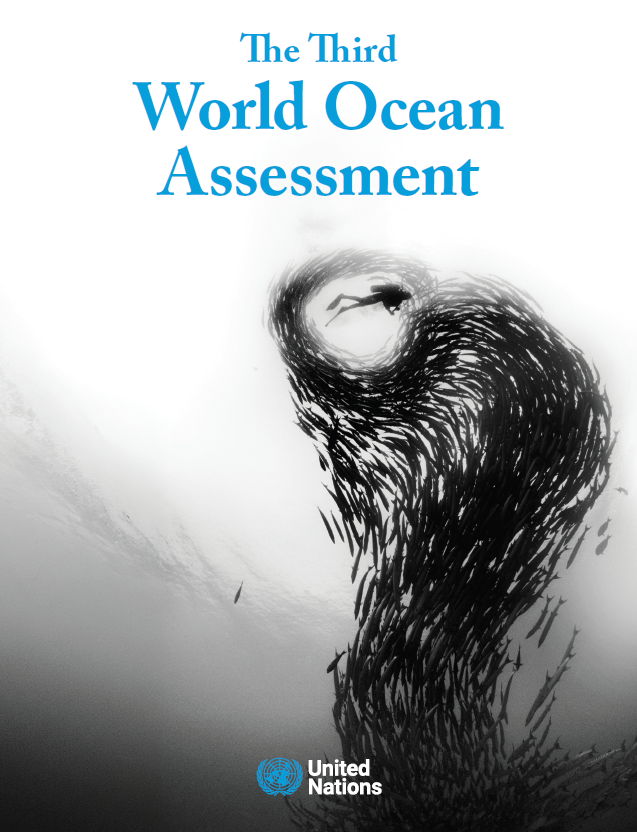
Although the third WOA was published in 2026, it highlights the changes from 2018 to 2023. We inevitably need time to assess, comprehend, and report on changes but we need to become faster, both in our initial monitoring assessments and research efforts, as well as integrating them into global assessments and reports.
Technology advancements, such as automated systems for biodiversity assessments, can help the first part while standardised data collection and processing helps the second, being crucial for timely production of policy-ready outputs. Let’s see what the WOA IV will reveal.