

Although the persistent problems caused by marine microplastics are no secret, scientists around the world are continuing to uncover new and deeper impacts on aquatic ecosystems and human health.
When microplastics gather in a fish’s gastrointestinal tract, it can affect their metabolism, immunity and reproduction. Yet, exactly how microplastic toxicity impacts fish health and why it causes microbial imbalances is not well understood.
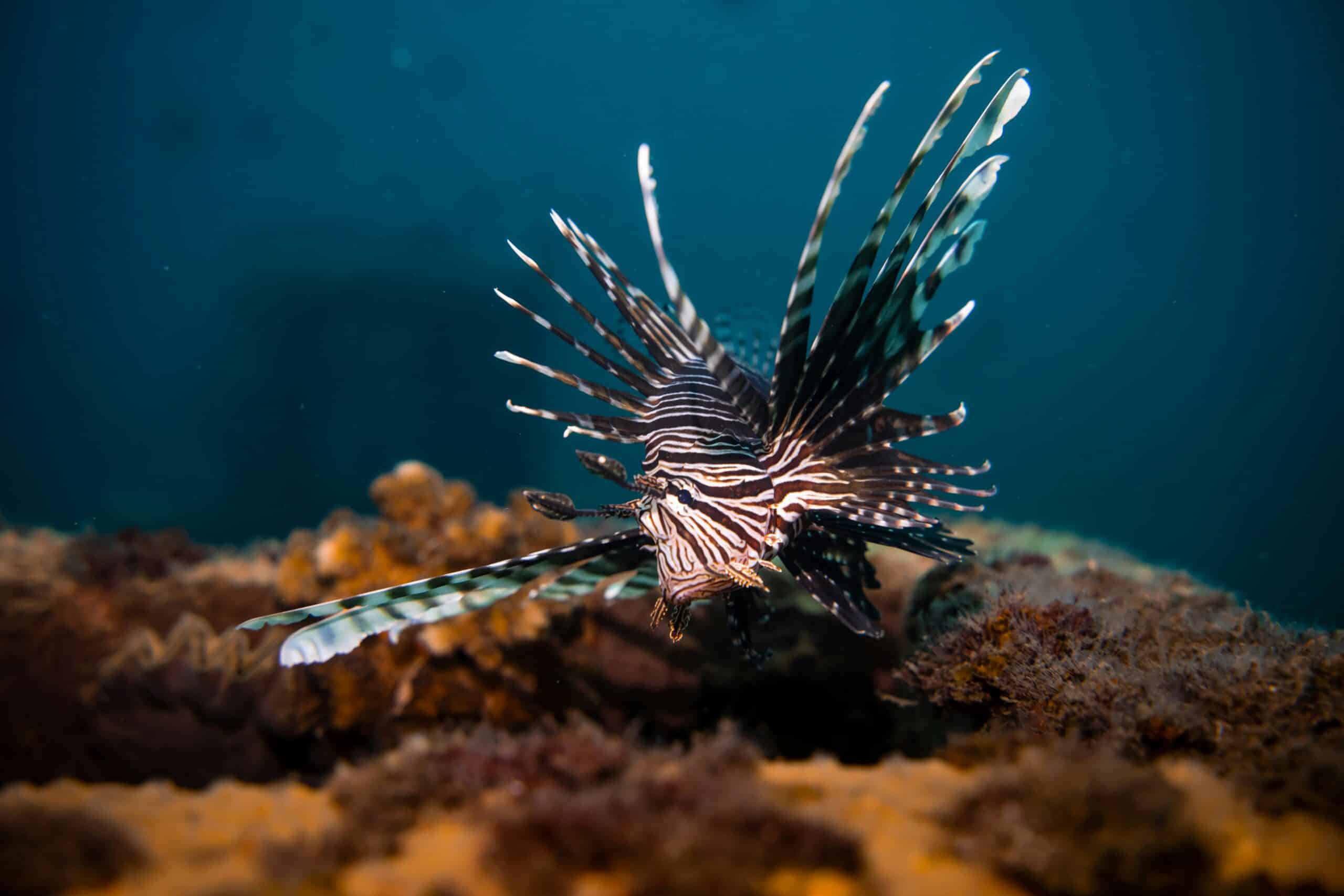
Getting to the bottom of these questions is particularly important for commercially fished and farmed species, such as seabream. When researchers at Università Politecnica delle Marche (UNIVPM) in Ancona had challenges accessing seabream juveniles, they turned to the Hellenic Centre for Marine Research (HCMR / EMBRC Greece) for support.
Through AQUASERV’s Transnational Access (TA) programme, the scientists could access HCMR’s aquaculture facilities and expertise to help them explore potential solutions to the impact of microplastics on the health of gilthead seabream (Sparus aurata).
Francesca Maradonna, a researcher at UNIVPM (EMBRC Italy), shares their progress and how it might support sustainable aquaculture and mitigating the impact of microplastics.
When seabream consume virgin or contaminated microplastics, it can change the make-up of their gut microbes, which can result in oxidative stress. The resulting damage caused to cells and tissues by this stress can impair the animal’s metabolism, immune system, and reproduction.
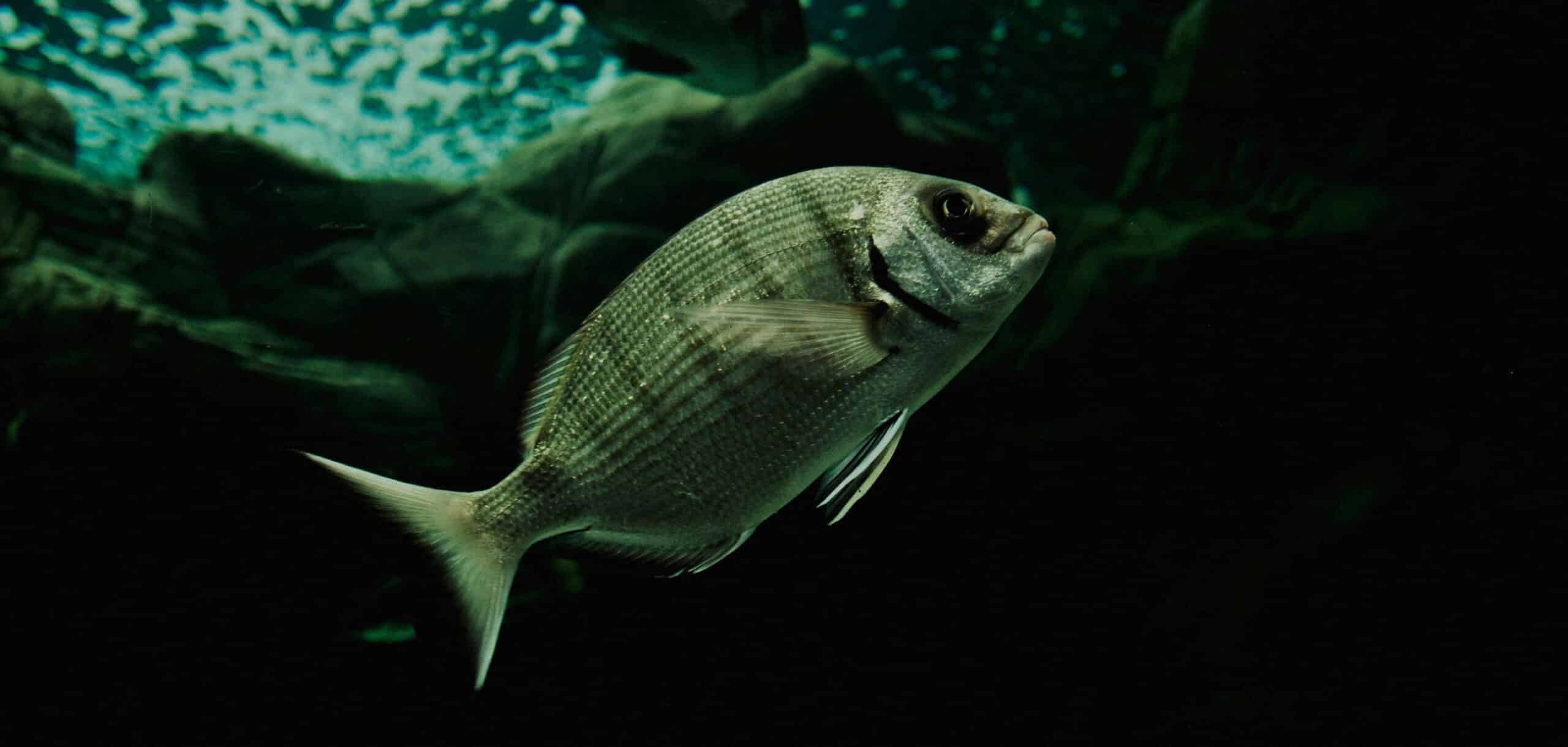
The TA programme enabled us to explore what happens to gilthead seabream health when the fish consume plastic particles – both virgin microplastics and those carrying toxic pollutants: the well-known endocrine-disrupting chemicals. We were interested in discovering whether delivering postbiotics can provide a solution that mitigates or counteracts plastic toxicity.
We’ve been focusing on the gilthead seabream because it represents one of the most commercially important species in the Mediterranean, both wild-caught and farmed. It is also quite common along the coastlines in our region.
Postbiotics offer several advantages which could facilitate its application both in routine contexts and in the aquaculture sector. They can enhance gut health and improve nutrient absorption, modulate the immune system, and increase resistance to pathogens without the risks associated with live microorganisms. They are also generally more stable and easier to handle than probiotics, making them a practical and safe option for promoting the overall health and growth of farmed aquatic species.
Probiotics have well-documented benefits, producing positive effects in metabolic, inflammatory, and reproductive contexts. Yet, they also present some important limitations. For example, their effects can be highly strain-specific and host-dependent, making outcomes variable and sometimes difficult to reproduce. The viability of live microorganisms can also be affected by storage, formulation, and environmental conditions and, in certain contexts, there may be safety concerns or unpredictable host–microbe interactions.
I chose to use postbiotics because they retain many of the beneficial bioactive components produced by probiotics while avoiding the need for live bacterial colonisation. This allows for better standardisation, improved stability, and a more reproducible approach as well as a more controlled assessment of mechanistic effects.

This project was possible thanks to AQUASERV’s Transnational Access (TA) programme. Through the TA, we received free access to equipment at the Hellenic Centre for Marine Research’s Institute of Marine Biology, Biotechnology and Aquaculture (HCMR-IMBBC / EMBRC Greece).
We used the recirculating aquaculture systems’ 18×500 litre tanks, prepared our experimental mixtures in the feed-preparation room, and stored samples in the -80°C freezer. We also benefitted from the know-how of HCMR’s highly experienced team.
Last year, there were a series of bureaucratic and practical difficulties related to the procurement of gilthead seabream larvae and juveniles from Italian hatcheries. It was also impossible for me to use the aquarium facilities at UNIVPM due to other ongoing experiments. This is why I applied for support within the framework of the AQUASERV calls.
Working with HCMR enabled us to push forward with our experiments and get results more quickly. We’re really pleased that we went this route: the staff, the facility, the environment, everything was super.

Hellenic Centre for Marine Research (HCMR / EMBRC Greece)
EMBRC Greece provides access to a diverse range of coastal marine habitats of Crete through coastal research vessels, submersibles and scuba diving facilities. The node can also provide ecological assessments (biodiversity assessment, habitat identification and mapping, ecological status assessments and determining the presence of pressures and threats), habitat mapping and sampling. Its biobanks offer sample series from the Aegean and Ionian seas since 1989.
Ingesting microplastics can cause a range of health issues, and it’s fairly common for them to cause intestinal mucosal abrasion, or, if they are too large, an obstruction. So far in our experiments, our macroscopic data showed that the seabream didn’t die when ingesting microplastics. We also did not see any mortality from all the treatments..
We’re still in the process of conducting omics analysis on target tissues. This will enable us to gather evidence on whether biological processes – such as metabolism, reproduction, and the function of the immune system – are affected positively or negatively by the treatments.
If dietary interventions can improve seabream health by offsetting the toxicity of ingested microplastics, this knowledge could have a huge impact on the field of sustainable aquaculture. Companies could protect their fish by incorporating postbiotics into their feed.
For producers, postbiotics can lead to higher survival rates, better growth performance, and reduced disease-related losses, ultimately improving production efficiency and profitability. For consumers, this can translate into safer, healthier fish with potentially improved nutritional quality.
AQUASERV
AQUASERV aims to advance knowledge in aquaculture, fisheries and other sustainable blue economy studies by providing transnational access and/or virtual access to top European research infrastructures to support key policies like the European Common Fisheries Policy, the Farm to Fork Strategy, and the European Green Deal.
This project was funded by the European Union